
HEMATOLOGY – AVAILABILITY AND ACCESS
Understanding Hematologic Malignancies Treatment Access Through Named Patient Programs: Availability and Access Pathways
Introduction
Hematologic malignancies—blood cancers including leukemia, lymphoma, and myeloma—affect millions of people globally. These diseases arise from abnormal blood cell proliferation and can develop rapidly or slowly depending on the specific type. For patients with advanced hematologic malignancies, access to appropriate treatment options can substantially impact survival and quality of life.
What is a Named Patient Program (NPP)?
A Named Patient Program is a regulated pathway that allows patients with serious or life-threatening conditions to access medications that may not yet be approved for general use in India. In India, NPP operations are governed by the Central Drugs Standard Control Organization (CDSCO) under the Drugs & Cosmetics Rules, 1945.
This program bridges the gap between patients who have exhausted standard treatment options and potentially beneficial medications available internationally, while maintaining strict safety standards.
How Does NPP Work?
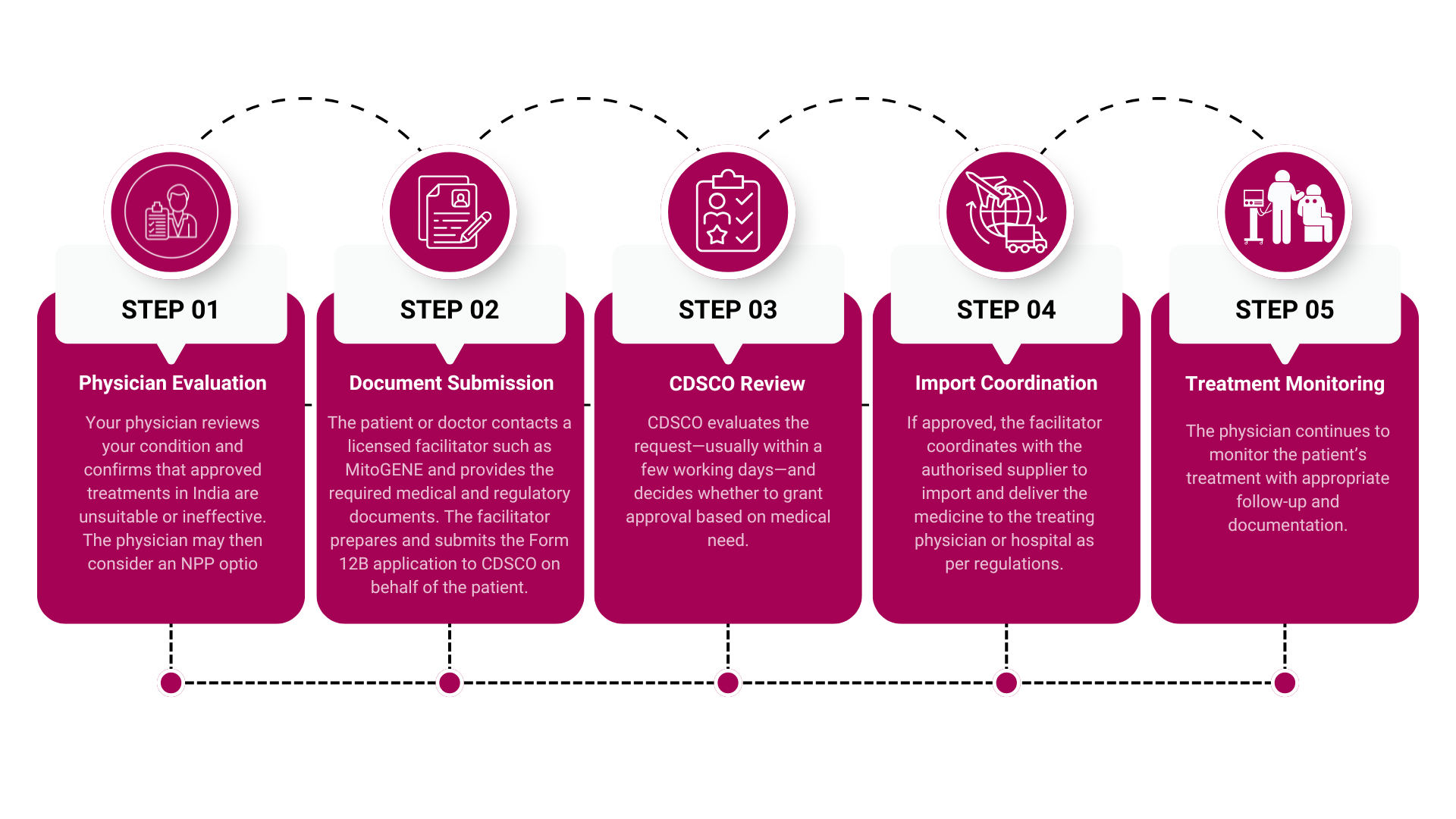
Understanding Hematologic Malignancies
Blood cancers differ from solid tumors, arising from blood cells in bone marrow, lymph nodes, or bloodstream. The treatment landscape varies depending on:
- Cancer type: Cancer type: Specific diagnosis (acute leukemia, chronic leukemia, lymphoma, myeloma, etc.)
- Disease stage and burden: How advanced and aggressive the disease is
- Molecular characteristics: Genetic mutations or chromosomal abnormalities
- Prior treatment history: What therapies have been attempted previously
- Overall health: Patient’s ability to tolerate intensive or systemic treatment
This comprehensive assessment guides treatment recommendations.

Eligibility for NPP Access
To qualify for NPP, hematologic malignancy patients typically must meet these criteria:
- Relapsed or refractory disease after standard treatments, or newly diagnosed disease where standard options are inadequate
- Medical evidence supporting potential benefit from the requested medication and approval in any other country especially USFDA or EMA
- Clear clinical justification by their treating hematologist/oncologist
- Adequate organ function to tolerate systemic therapy
- Informed consent after understanding potential risks and benefits
Available Hematologic Malignancy Treatment Options
Several systemic therapy approaches are used to treat hematologic malignancies:
For B-cell lymphomas and chronic lymphocytic leukemia:
- Jaypirca (pirtobrutinib) – Bruton’s Tyrosine Kinase inhibitor for relapsed/refractory mantle cell lymphoma and chronic lymphocytic leukemia
- Other BTK inhibitors available internationally
BTK inhibitors have revolutionized treatment of B-cell malignancies by targeting a critical survival pathway in these cancer cells.
For chronic myeloid leukemia and other hematologic malignancies:
- Available internationally for various molecular targets
- Often used in sequence as disease adapts to initial therapy
For various hematologic malignancies:
- CD20-directed antibodies for B-cell lymphomas
- CD38-directed antibodies for multiple myeloma
- Other antibody approaches targeting specific blood cancer markers
Novel agents that engage both cancer cells and immune cells:
- Emerging approach showing promise in multiple myeloma and lymphomas
- Can achieve responses in difficult-to-treat populations
For multiple myeloma and lymphomas:
- Thalidomide analogs with immune-activating properties
- Often combined with other agents for enhanced benefit
Advanced cellular immunotherapy:
- Engineered T cells targeting specific cancer cell markers
- Available for select hematologic malignancies
For multiple myeloma and certain lymphomas:
- Target protein degradation machinery in cancer cells
For certain lymphomas:
- Block epigenetic pathways involved in lymphoma cells
Before treatment recommendations, comprehensive testing of blood/bone marrow cells is essential:
- Cytogenetic testing: Identifying chromosomal abnormalities (t(9;22), t(15;17), etc.)
- Molecular genetic testing: Identifying point mutations and gene alterations
- Immunophenotyping: Identifying specific cell markers
- Flow cytometry: Characterizing abnormal cell populations
- Mutation panels: Testing for actionable alterations guiding therapy selection
These tests guide your doctor’s treatment recommendations and help identify NPP-eligible options.
Organizations like MitoGENE facilitate the NPP process by:
- Educating patients and physicians about NPP and eligibility
- Facilitating patients to get 12 B import permit for personal use from CDSCO
- Connecting patients with legitimate international medicine sources
- Ensuring regulatory compliance
- Providing documentation support for NPP applications
- Coordinating logistics for legal importation and delivery
By working with MitoGENE, patients access expertise and connections necessary to navigate NPP successfully.
“Plz Note: All clinical decisions—including whether a therapy is suitable—are made solely by the treating physician and MitoGENE does not influence prescribing decisions or the medical judgment of physicians”
The Named Patient Program provides an important mechanism for patients with hematologic malignancies to access innovative medications not yet widely available in India, while maintaining rigorous safety standards. For patients with relapsed/refractory disease or inadequately-treated newly-diagnosed disease, NPP may provide access to promising therapies available internationally.
This pathway recognizes that fixed approval timelines can disadvantage patients with urgent medical needs, particularly those with aggressive blood cancers. However, NPP is not a replacement for standard treatment—it’s a carefully controlled access mechanism for specific patients in genuine medical need.
his information is educational. Patients considering NPP should engage in detailed discussions with their treating hematologists regarding whether NPP is appropriate for their individual circumstances, what realistic expectations are, and what potential risks exist for any treatment being considered.
For personalized information about treatment options and whether NPP might be suitable for your specific hematologic malignancy situation, consult with your hematologic oncologist or an experienced blood cancer treatment center.
Leave a Comment