
WHY COLD CHAIN MAINTENANCE IS CRITICAL FOR CERTAIN MEDICINES
Understanding Temperature-Sensitive Medicines
Not all medicines can be transported and stored at room temperature.
Many advanced therapies especially biologics, immunotherapies, injectables, and specialty medicines require strict temperature control throughout transportation and storage.
This process is known as cold chain maintenance.
Even short exposure to incorrect temperatures may reduce the effectiveness of certain medicines.
What Is a Cold Chain?
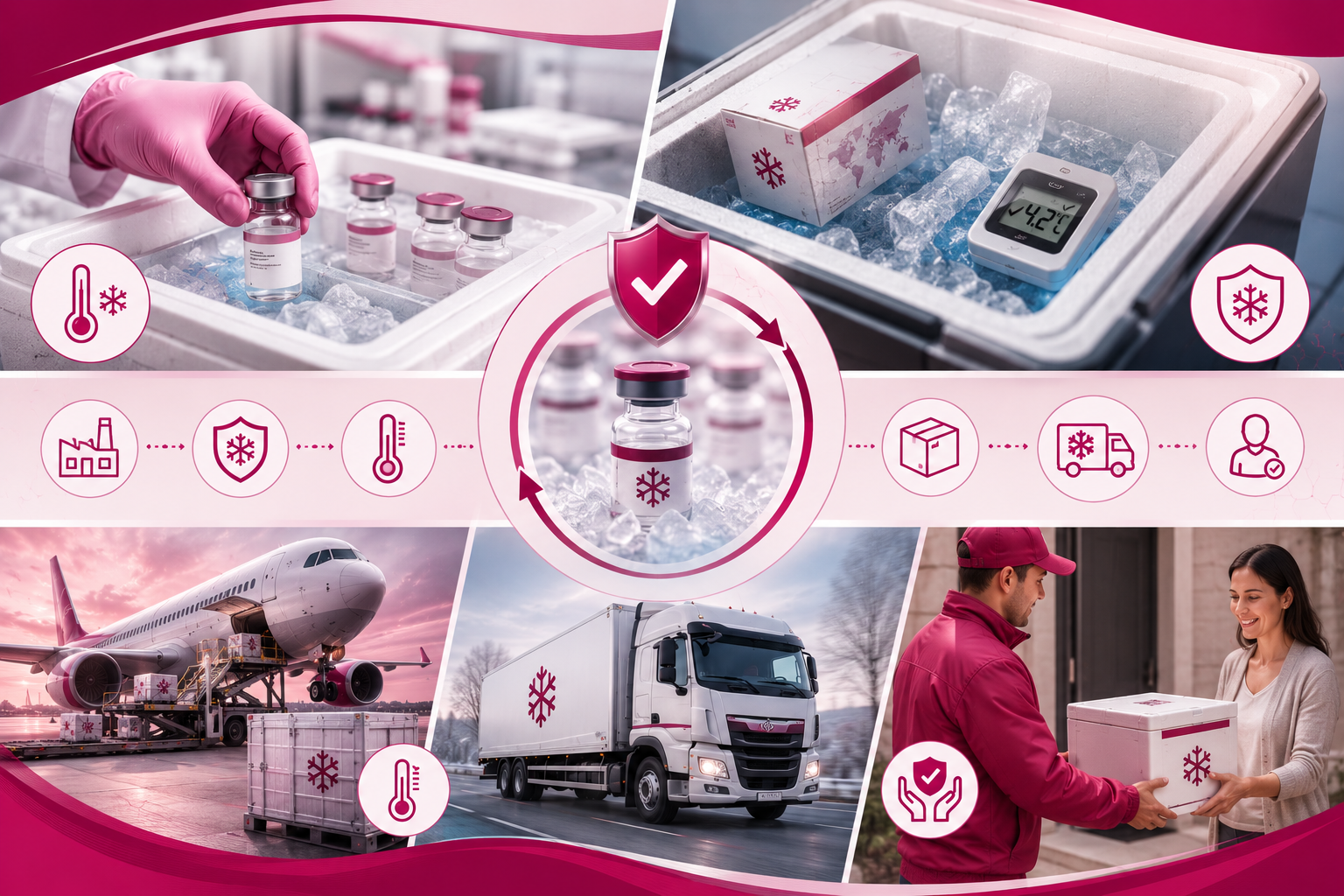
A cold chain refers to a temperature-controlled supply system that maintains medicines within a required temperature range from manufacturer to patient.
This may involve:
- Refrigerated packaging
- Gel packs or dry ice
- Temperature data loggers
- Insulated shipping systems
- Validated courier handling
- Controlled warehouse storage
The required range varies depending on the medicine.
Common storage ranges include:
- 2°C to 8°C
- Frozen conditions
- Controlled room temperature
Why Temperature Control Matters
Certain medicines are highly sensitive to heat, freezing, humidity, or temperature fluctuations.
Improper storage may lead to:
- Loss of potency
- Protein degradation
- Structural instability
- Reduced effectiveness
- Increased risk of treatment failure
In many cases, the medicine may still look normal visually even after degradation.
Medicines Commonly Requiring Cold Chain Management
Many monoclonal antibodies and immunotherapy medicines require strict refrigeration.
Examples may include:
- Checkpoint inhibitors
- Certain lymphoma therapies
- CAR-T associated products
Biologics are particularly temperature sensitive because they are complex protein-based products.
Even brief exposure to heat may damage molecular stability.
Some hormonal products and specialty injectables also require refrigerated transport.
Real-World Risks of Poor Cold Chain Handling
Example Scenario
Imagine a biologic medicine that must remain between 2°C and 8°C.
If the product is exposed to 35°C temperatures during transit for several hours:
- The active protein structure may degrade
- The medicine may lose therapeutic activity
- The patient may unknowingly receive a compromised treatment
This is why proper logistics matter as much as the medicine itself.
How Responsible Cold Chain Logistics Work
A compliant cold-chain process may include:
- Validated insulated packaging
- Continuous temperature monitoring
- Fast transit coordination
- Priority customs clearance
- Trained logistics handlers
- Temperature-sensitive storage facilities
- Documentation and traceability
How MitoGENE Supports Safe Medicine Logistics
MitoGENE coordinates specialized logistics support for temperature-sensitive medicines by:
- Working with regulated international supply channels
- Coordinating cold-chain shipping where required
- Supporting customs and import handling
- Monitoring transit coordination
- Prioritizing patient safety and medicine integrity
What Patients Should Ask Before Ordering Temperature-Sensitive Medicines
Patients and caregivers should ask:
- Does this medicine require refrigeration?
- How will the product be shipped?
- Is temperature monitoring used?
- What happens during customs clearance?
- How quickly will delivery occur?
- How should the medicine be stored after receipt?
A responsible supplier should be able to answer these questions clearly.
Final Thoughts
For many advanced therapies, maintaining the correct temperature is essential to preserving medicine quality and treatment effectiveness.
Cold chain management is not simply a logistics feature. It is a critical patient safety requirement.
Patients should always work with trusted providers who understand the importance of proper handling, documentation, and temperature-controlled transportation.