
The Role of Cold Chain Logistics in Modern Oncology Treatments

Advanced Cancer Therapies Require Advanced Handling
Modern oncology treatment has evolved significantly over the past decade.
Many therapies now involve:
- Biologic medicines
- Immunotherapies
- Monoclonal antibodies
- Precision oncology products
- Specialty injectables
While these therapies have improved outcomes for many patients, they also require highly specialized storage and transportation conditions.
For many oncology medicines, maintaining the correct temperature throughout transit is essential to preserving medicine integrity.
What Is Cold Chain Logistics?
Cold-chain logistics refers to a temperature-controlled supply system designed to maintain medicines within specific temperature ranges from manufacturer to patient.
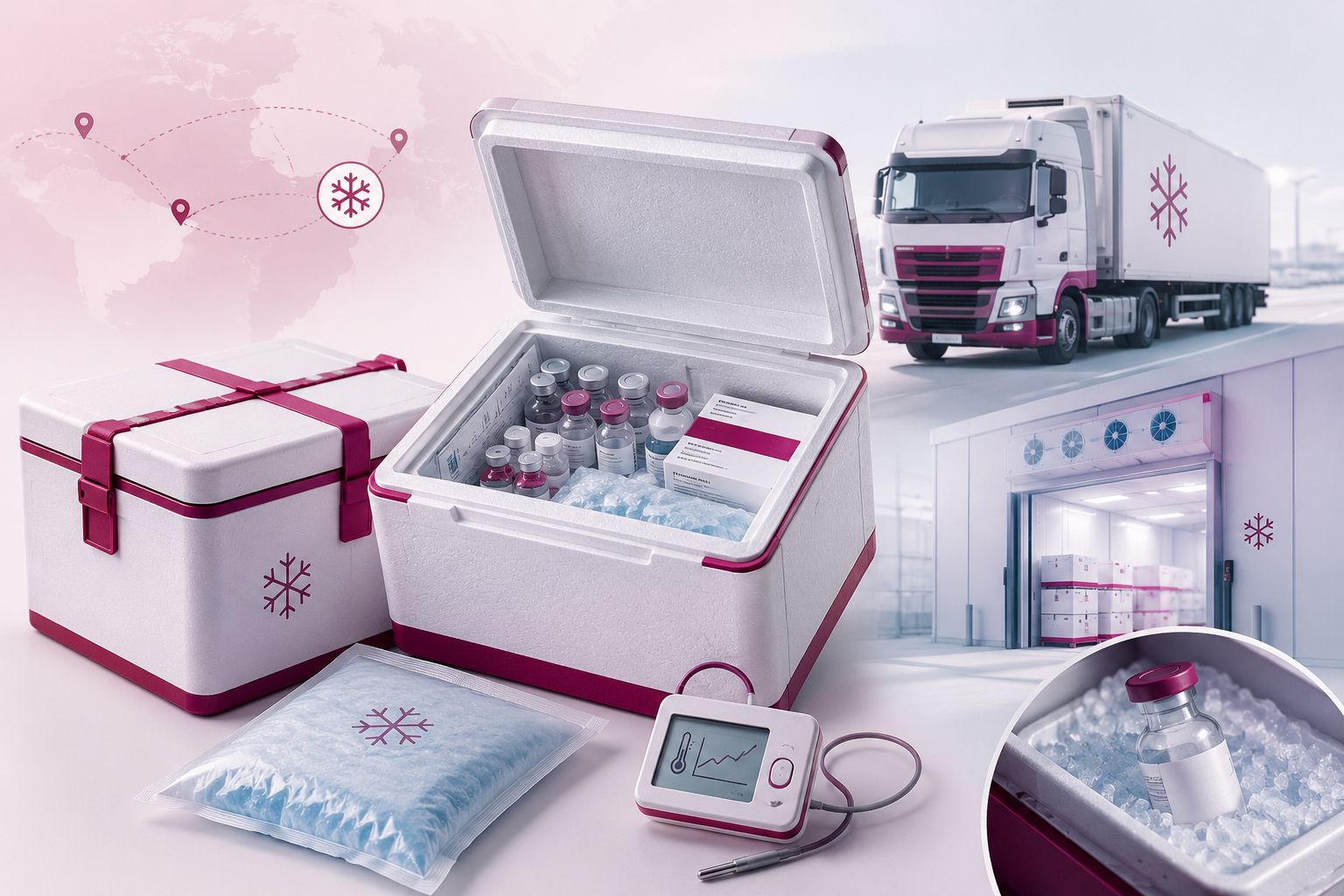
This process may involve:
- Refrigerated packaging
- Gel packs or dry ice
- Insulated transport systems
- Temperature data loggers
- Specialized courier handling
- Controlled storage facilities
The objective is to prevent temperature excursions that may damage medicine quality.
Why Oncology Medicines Are Temperature Sensitive
Many modern cancer therapies contain highly complex biological molecules.
Unlike conventional tablets, biologic medicines may become unstable if exposed to:
Protein degradation or structural instability can reduce therapeutic effectiveness.
In some cases, the medicine may still appear visually normal despite loss of potency.
Real-World Challenges During International Transport
International medicine logistics can involve multiple stages, including:
- Airport handling
- Customs clearance
- Warehouse storage
- Regional courier delivery
- Cross-border transit
Without proper coordination, temperature-sensitive products may remain exposed to unsuitable conditions.
This is particularly important in regions with high ambient temperatures.
Example Scenario
Imagine an immunotherapy product requiring storage between 2°C and 8°C.
If the medicine is exposed to high temperatures during customs delays or improper courier handling:
- The active biologic structure may degrade
- Therapeutic activity may reduce
- Treatment reliability may become compromised
This is why logistics quality is directly connected to patient safety.
Importance of Temperature Monitoring
Professional cold-chain systems often use:
- Temperature data loggers
- Continuous monitoring systems
- Validated packaging protocols
- Transit validation procedures
These systems help confirm medicines remained within acceptable temperature ranges throughout transportation.
Why Hospitals and Doctors Should Verify Cold-Chain Practices
Healthcare providers should ensure that temperature-sensitive medicines are:
- Transported correctly
- Stored appropriately
- Delivered through trained logistics systems
- Accompanied by proper documentation
Cold-chain verification is especially important for imported oncology therapies.
How Responsible Providers Coordinate Cold Chain Logistics
Experienced specialty medicine providers may coordinate:
- Validated insulated packaging
- Priority customs handling
- Temperature-sensitive shipping systems
- Trained logistics coordination
- Fast transit pathways
- Traceability documentation
At MitoGENE, patient safety and medicine integrity remain key priorities during specialty medicine logistics.
What Patients Should Ask Before Ordering Temperature-Sensitive Medicines
Patients and caregivers should ask:
- Does the medicine require refrigeration?
- How will it be transported?
- Is temperature monitoring used?
- How long will transit take?
- What storage conditions are required after delivery?
Responsible providers should answer these questions transparently.
Final Thoughts
For many modern oncology therapies, cold-chain management is not optional — it is an essential part of treatment quality.
Safe handling, temperature control, and professional logistics coordination help protect medicine effectiveness and patient outcomes.
Patients and healthcare professionals should always prioritize providers experienced in specialty medicine logistics.